
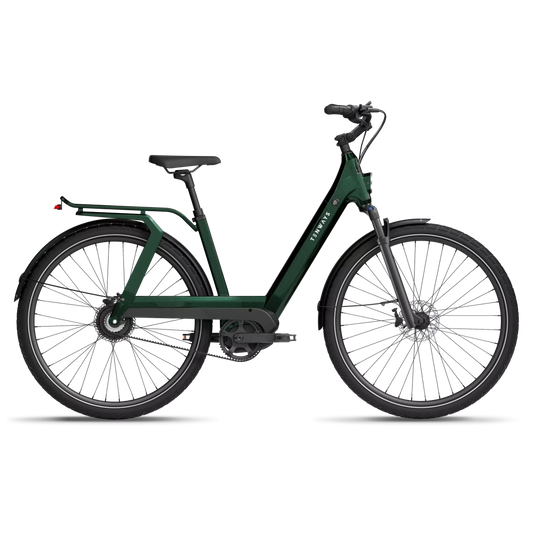
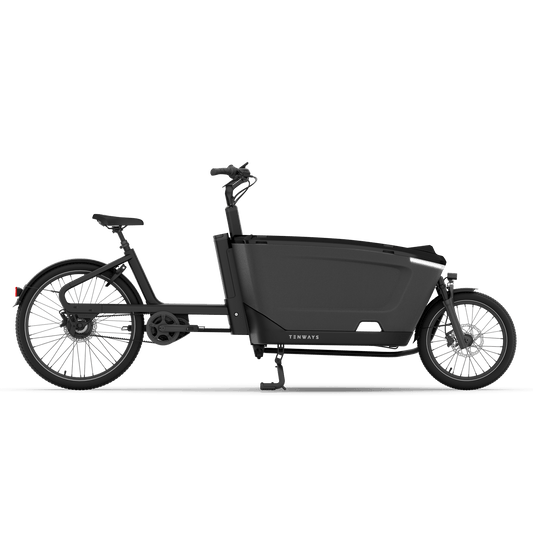


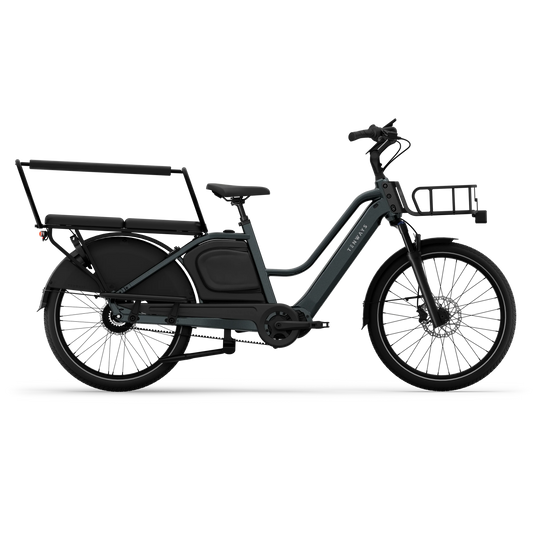
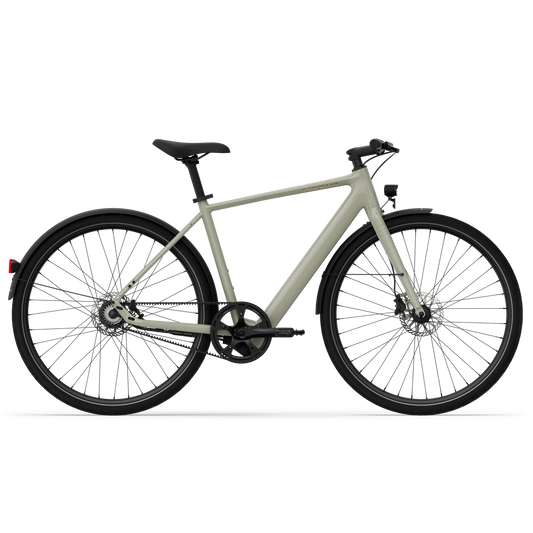


For an older rider, a low entry matters only when the whole bike supports confident starts, slow-speed control and easy braking. The useful test is practical: the rider should be able to mount, reach every control, stop smoothly and repeat those actions without strain. Strength, balance and mobility matter more than age alone.
What Seniors Need from a Step-Through E-Bike
The bike should be easy to mount, predictable to steer and simple to control. Assistance needs to arrive smoothly, the brakes should be easy to modulate and the riding position should provide a clear view without placing excessive weight on the hands.
Practical details matter just as much. Consider where the bike will be stored, whether the battery needs to be removed for charging and how much weight the rider may carry. A comfortable bike that is difficult to manoeuvre off the road can still become inconvenient.

The complete guide to step-through electric bikes covers motors, batteries and frame types beyond the senior-specific fit checks here.
Low Entry, Fit and Low-Speed Stability
A lower entry reduces the height the rider must clear, which helps when hip or knee movement is limited. Compare the actual entry height rather than relying on the words ‘low step’. Frame shapes vary, and the narrowest point is not always where the foot naturally passes.
Being able to place a foot down quickly can improve confidence at junctions. That does not mean the saddle should be set permanently too low. With the pedal near the bottom of its stroke, the knee should retain a slight bend. If safe ground contact and efficient pedalling cannot both be achieved, a different frame size or geometry may be needed.
Entry height
Practise stepping through the frame while the bike is held securely. The movement should be clear of cables, bottle mounts and luggage.
Saddle position
Check the minimum saddle height and the distance between saddle and handlebar. A suspension seatpost can add comfort, but it may also raise the minimum position.
Low-speed stability comes from the complete geometry, not simply from a low frame. Wheelbase, steering angle, tyre width, handlebar position and weight distribution all affect how the bike behaves when starting, turning tightly or moving through a crowded cycle lane.
A very upright position can feel reassuring and gives a good view ahead. It may also place more body weight on the saddle. The aim is a neutral posture: shoulders relaxed, elbows slightly bent and hands resting on the grips without reaching.
Test the bike at walking pace as well as at normal speed. Ride a wide figure of eight, stop beside a kerb and restart on a gentle incline. These simple checks reveal more about control than a fast lap on a straight road.
Motor Control and Mid-Drive Options
Smooth assistance is more important than aggressive acceleration. A torque sensor responds to pressure on the pedals, which can make starts feel natural and predictable. The rider should be able to select the assistance level without looking away from the road for long.
A rear-hub motor can be well suited to steady urban riding. A mid-drive motor places its weight centrally and works through the bicycle’s gears, which can help on steeper routes or with heavier loads. It also asks the rider to choose gears sensibly.

The AGO T combines a step-through frame with an 80 Nm mid-drive motor and stepless Enviolo shifting, making it a relevant option for riders who regularly meet hills. The CGO800S | Plus uses a rear-hub motor and a relaxed urban geometry for smoother city journeys. The best choice depends on the route and the rider’s confidence with the controls.
For a fuller explanation, see our guide to electric bike motor types.
Brakes, Starting and Stopping Safely
Brake levers should be reachable without stretching the fingers or rotating the wrists. Ask a dealer to check whether lever reach can be adjusted. The rider should be able to apply both brakes progressively while keeping the handlebars straight.
Practise starts in a low assistance setting. Select an easy gear when the bike has multiple gears, place one pedal slightly forward and apply steady pressure rather than stamping down. When stopping, reduce speed in a straight line, prepare one foot early and look where the bike should finish.
Hydraulic disc brakes offer strong, consistent braking in varied weather, but they still need correctly bedded pads, clean rotors and regular inspection. Any braking system should feel predictable before the bike is used in traffic.

Fit and Test-Ride Checklist
A useful test ride includes the situations the rider will meet in real life, not only a smooth showroom loop.
Step through the frame several times from both sides.
Adjust the saddle for pedalling, then confirm safe ground contact when stopping.
Check handlebar reach, grip position and brake-lever reach.
Start in the lowest assistance level and confirm that support arrives smoothly.
Ride slowly, turn in both directions and stop beside a kerb.
Try a gentle hill if the normal route includes one.
Lift or push the bike through the storage area it will actually use.
Check that lights, display and motor controls remain clear and easy to operate.
Handlebar reach
The rider should not need to lock the elbows or lean forward to reach the grips. An adjustable stem can help, but it cannot correct a frame that is fundamentally too long.
Brake levers
Confirm that both levers can be reached and controlled from the normal hand position. Comfort while stationary is not enough; repeat the check during a slow stop.
Motor controls
The display should be legible in daylight, and the assistance buttons should be identifiable by touch after a short period of practice.
Frequently Asked Questions
Is a step-through e-bike safer for an older rider?
It can make mounting and stopping easier, but safety depends on fit, balance, braking control, route choice and practice. A low entry is one useful feature, not a complete safety system.
Should both feet touch the ground?
The rider should be able to stop confidently and place a foot down without sliding far off the saddle. Requiring both feet to sit flat can force the saddle too low for efficient pedalling, so the final setup should be checked during a test ride.
Is a mid-drive motor always better for seniors?
No. Mid-drive systems are useful on hills and with loads, while a smooth rear-hub system may be simpler for flatter city routes. Control response and gearing matter more than motor position alone.
What is the most important test before buying?
Repeat the full start–ride–stop sequence several times. The bike should feel calm and predictable at low speed, and the rider should be able to use the brakes and assistance without changing their natural posture.
A suitable e-bike should build confidence from the first few metres. Choose the model that fits the rider’s movement, route and storage routine, then allow time to practise in a quiet place before entering busy traffic.


