
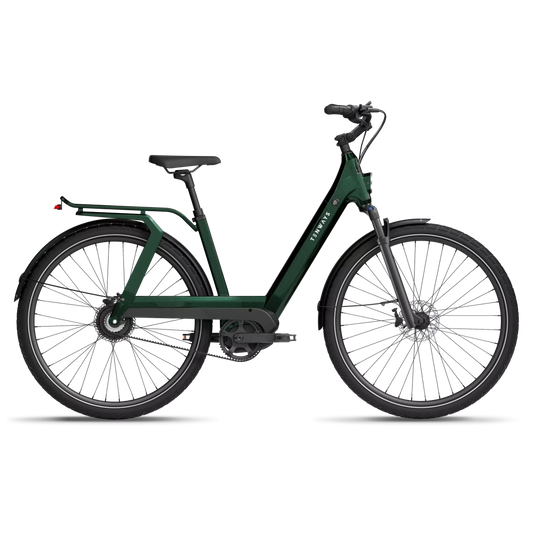
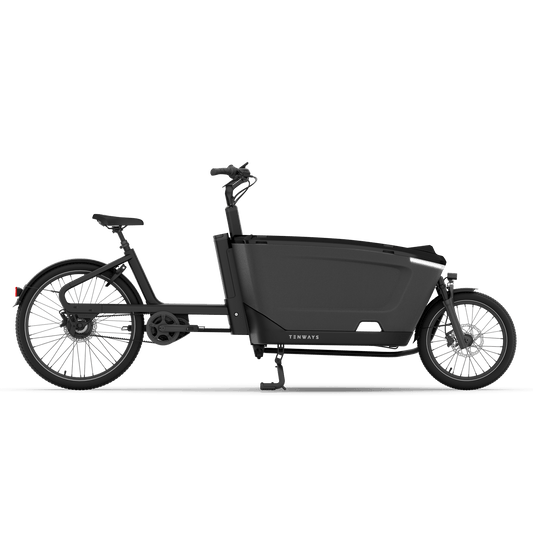


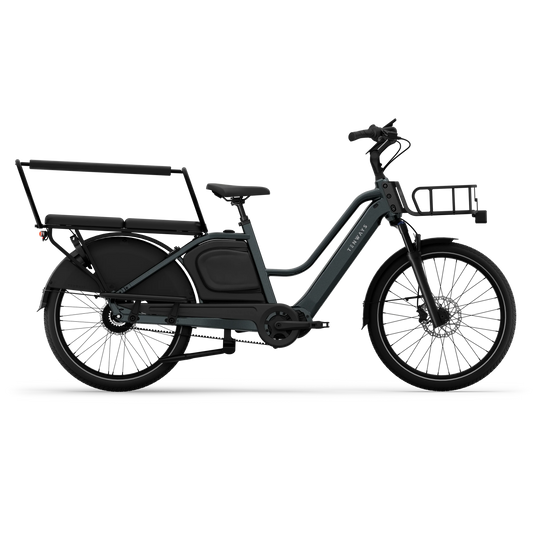
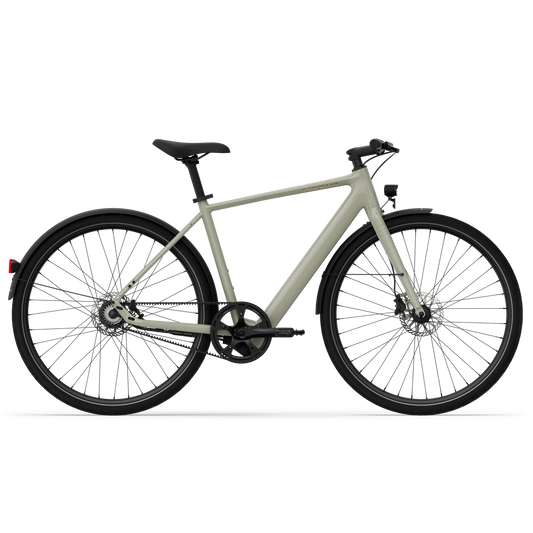


A step-through frame can work on rougher ground only when the frame, fork, brakes, wheels and manufacturer’s intended-use category match the terrain. Choose it for easier access and mixed-surface control, not for mountain-bike styling: gravel paths and forest roads place very different loads on a bike from technical trails.
Can a Step-Through Frame Handle Mountain Riding?
Yes, when the frame has been engineered and approved for the intended use. Designers can control stiffness through tube shape, wall thickness, material placement and reinforced junctions. The absence of a high top tube does not by itself define strength.
The limit is the complete design. Check the manufacturer’s terrain classification, permitted total weight and exclusions. A city step-through with a suspension fork may improve comfort over cobbles without being suitable for drops, jumps or technical descents.

If most rides stay on roads or cycle paths, the complete step-through e-bike guide offers a better starting point. Mountain hardware only earns its weight and complexity when the route genuinely needs it.
Hardtail vs Full Suspension
A hardtail uses a suspension fork and a rigid rear frame. It is mechanically simpler, usually lighter and efficient on smoother climbs, gravel and less technical trails. The rider and rear tyre absorb impacts that reach the back of the bike.
A full-suspension bike adds a rear shock and moving frame linkage. It can improve traction and control on rough descents, but it adds weight, service points and cost. Suspension setup also needs to match rider weight, luggage and terrain.
On a step-through platform, rear-suspension packaging can be more complex because the frame already has an open central area. Do not assume that a visible rear shock guarantees suitable geometry or structural testing.
Frame Strength, Load and Material
Frame stiffness affects steering accuracy and how the bike responds when pedalling, braking or crossing uneven ground. Too much unwanted flex can make a loaded bike feel vague. The rider cannot judge long-term structural strength from a short bounce test, so manufacturer documentation matters.
Permitted total weight normally includes the bike, rider and luggage. Off-road loads can be higher and more sudden than the same static weight on smooth tarmac. Stay within the limit and avoid fitting carriers or child seats unless the model and accessory are approved for that use.

Inspect the frame regularly around welds, motor mounts, head tube, suspension pivots and dropouts. Stop riding after a hard impact if alignment, cracks or unusual noises need checking.
Aluminium is widely used because it supports durable, cost-effective frame construction. Tube shape and heat treatment allow designers to tune stiffness, and visible damage can sometimes be easier to identify.
Carbon fibre can place material along specific load paths and achieve a high stiffness-to-weight ratio. Impact damage may be less obvious, and inspection or repair requires specialist knowledge. Carbon is not automatically lighter, stronger or better for every step-through design.
Compare the complete frame’s intended use, warranty and inspection guidance. Material names alone say little about geometry, manufacturing quality or trail capability.
Fat Tires vs Suspension
Wide tyres and suspension solve different problems. A larger tyre volume can add grip and absorb small surface vibration. Suspension allows the wheel to move over larger impacts while helping it maintain contact with the ground.
Lower tyre pressure can improve compliance and traction within the tyre maker’s safe range, but too little pressure increases squirm, rim strikes and pinch damage. Suspension cannot correct unsuitable tyres, and wide tyres cannot replace controlled fork or shock movement on repeated rough impacts.
If the category itself is unfamiliar, our guide to what separates a fatbike from a standard e-bike explains the usual tyre, weight and use differences.

Terrain Limits and Safety
Match the bike to the hardest section of the route. Canal paths, compact gravel and forest roads may suit a mixed-surface e-bike, while rock gardens, jumps and steep technical descents require a machine explicitly rated for that use.
Confirm the manufacturer’s intended terrain and maximum system weight.
Use brakes and tyres suited to the surface and weather.
Set suspension and tyre pressure for rider weight and load.
Check wheel security, brake pads and frame condition before rough rides.
Wear appropriate protective equipment and follow local trail rules.
Turn back when surface, weather or rider skill exceeds the planned level.
European access rules vary between public roads, cycle paths, forests and designated trails. Motor classification may also affect where an e-bike can be ridden. Check the land manager and national or local authority before entering a restricted route.
Who Should Choose This Type?
A step-through mountain-oriented e-bike can suit riders who need easier mounting and regularly use gravel, forest roads or rough mixed-surface routes. It should provide the tyre clearance, braking and suspension required for those journeys without exceeding the manufacturer’s use category.
It is less suitable when the route is almost entirely smooth city riding, where extra tyre and suspension weight may bring little benefit. It is also the wrong choice for technical mountain use unless the model is explicitly designed, tested and supported for that level.

Buy around terrain evidence rather than style. A clear use rating, suitable components and local service support are more valuable than a ‘mountain’ label on a bike designed mainly for the street.


