
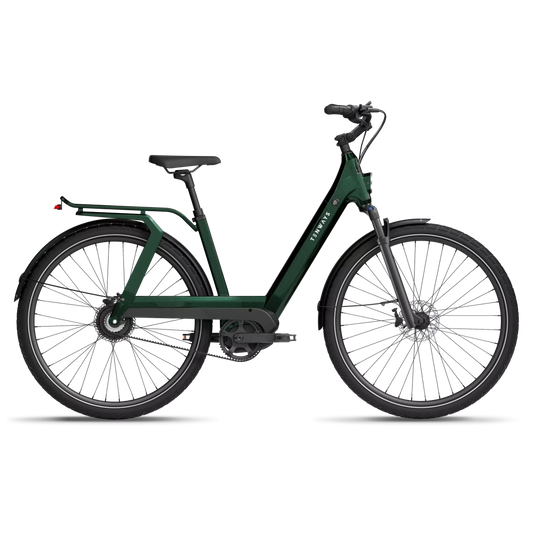
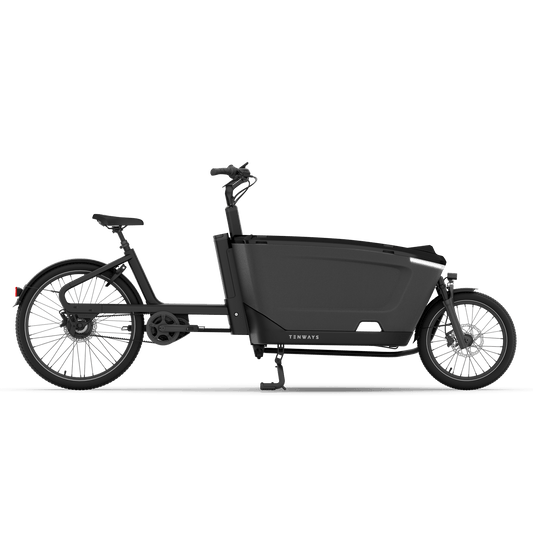


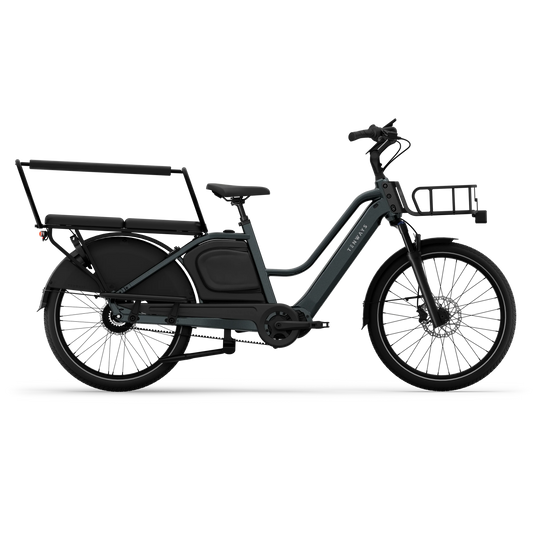
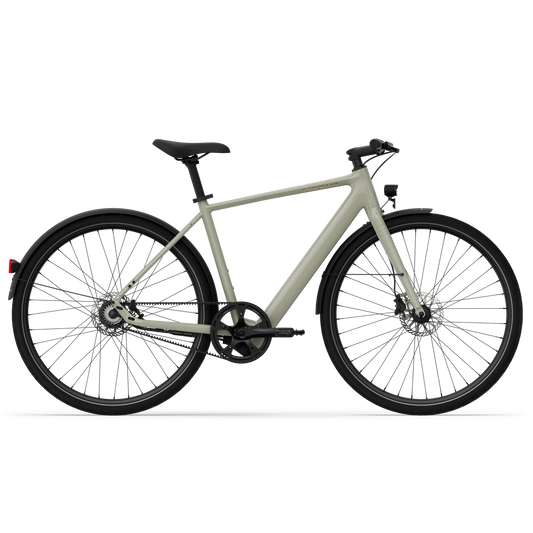


A lighter step-through e-bike is easier to manage before and after the ride. It can be simpler to move through a narrow entrance, position in shared storage or steady at a crowded cycle stand. For shorter riders, however, a low number on the specification sheet is only useful when the frame also fits.
Weight alone does not define the category. This article focuses on open-frame bikes that are genuinely easier to lift and control; the complete guide to step-through electric bikes covers the broader choice of motors, batteries and frame types.
What Counts as Light for a Step-Through E-Bike?
There is no universal weight threshold for a step-through model. Batteries, motors, suspension, racks and reinforced frame sections all add weight, so the useful comparison is between bikes designed for a similar job.
A stripped-back urban model may sit close to the weight of a conventional city bike, while a comfort-focused mid-drive model can be considerably heavier. Neither figure is automatically good or bad. The question is whether the rider needs to lift, push or store the complete bike, and how often.

Compare like with like. A figure without mudguards, rack, lock or other daily equipment can look attractive but may not describe the bike you will handle at home.
Why Total Weight and Battery Weight Both Matter
Use the net weight definition supplied by the manufacturer. Check whether it includes the battery and excludes accessories. Then add the equipment required for the real journey, including a lock, pannier, child seat or front carrier where applicable.
A removable battery can reduce the amount lifted at one time. It also allows charging indoors when the bike remains in a communal store. An integrated battery cannot be removed for that purpose, but it can contribute to a cleaner, more compact frame design.
Do not assume that a removable battery makes every heavy bike easy to carry. The frame, motor and wheels still determine the remaining weight, while the bike’s size affects how comfortably it can be held.
Fit for Shorter Riders
The first measurements are minimum saddle height and reach. A low step helps the rider enter the frame, but it does not shorten the distance to the handlebar or guarantee a suitable pedalling position.
Minimum saddle height
Set the saddle low enough for confident starts, then check leg extension with the pedal at the bottom of the stroke. The knee should remain slightly bent without the hips rocking from side to side.
Reach
The grips should be accessible with relaxed shoulders and a slight bend in the elbows. If the rider must slide forward on the saddle or lock the arms, the frame is too long or the cockpit needs a safe adjustment.
Standover and entry
Measure the opening where the foot actually passes. Clothing, front luggage and frame-mounted accessories can affect the movement, so test the complete setup rather than the bare frame.
Handling
Shorter riders often notice weight distribution more than the headline weight. A bike with central mass and predictable steering can feel easier to control than a lighter model with awkward reach or a high rear load.
Our guide to step-through and step-over frames explains how frame structure changes access and handling. Riders whose main concern is low-speed confidence can also use the senior fit and stability guide; the checks apply at any age.

Lifting, Carrying and Storage
Recreate the hardest movement before buying. If the bike must pass one step, lift it over one step. If it will hang on a rack, confirm that the rack accepts the frame shape and weight. If it goes through a hallway, turn it through the same width.
Lift with a straight back and two secure contact points, typically the frame and fork area or an approved carrying point. Avoid lifting by cables, display mounts, mudguards or the saddle alone. Remove loose luggage first.
For upper-floor storage, even a relatively light step-through e-bike may be awkward because of its length. A ground-level store, ramp or suitable lift can matter more than saving a kilogram.
If low weight is the priority and an open frame is optional, the CGO600 is TENWAYS’ lightweight electric bike for flat urban routes. Its 15 kg net weight includes the battery and excludes accessories. This keeps the broad lightweight category on the dedicated product page rather than turning the step-through guide into a competing general ranking.

If floor space matters more than an open frame, a small electric bike such as the CGO COMPACT may solve the storage problem more directly. Its smaller wheels, folding pedals and adjustable cockpit reduce the space required without presenting it as a folding-frame model.
How to Compare Claimed and Measured Weight
A useful comparison records the condition of each bike, not just the number.
Confirm whether the published figure includes the battery.
Check which accessories are excluded.
Use the same frame size when a model is sold in several sizes.
Add the lock and luggage system needed for daily use.
Note whether the battery can be removed before lifting.
Check the manufacturer’s stated weight tolerance.
If a dealer can weigh the display bike, ask which accessories are fitted and whether the battery is installed. A measured figure is only more useful when the test conditions are clear.
Test-Ride and Fit Checklist
The final check is practical. A bike should feel easy to manage at walking pace as well as comfortable once the motor is assisting.
Step through from both sides without catching a foot.
Set the saddle for pedalling and confirm a confident stop.
Reach the grips, display and brake levers without stretching.
Push the bike with the motor switched off.
Turn tightly at low speed and restart on a slight incline.
Lift the bike only if lifting is part of the normal routine.
Repeat the test with the luggage or accessories you expect to carry.
Weight, fit and handling should be judged together. Choose the bike that removes effort from the complete routine, not simply the one with the lowest published number.


