




A fat bike is a bicycle with notably wide tires. In the Netherlands, the term usually refers to an electric fat bike: a model with a battery, motor, and pedal assistance. It is not a separate legal vehicle category as long as it meets the rules for a standard e-bike.
The main differences from a standard electric bike are the tires, construction, riding position, and weight. The better choice therefore depends less on appearance than on your route, distance, storage space, and transport needs.
What is a fat bike?
A fat bike is designed around tires that are much wider than those on a city or trekking bike. Many electric models use tires around 4 inches wide, but there is no statutory minimum width that defines a fat bike. The wide tires increase the contact patch and can provide comfort and grip on sand, loose ground, and uneven roads.
| Term | Meaning | Electric? |
|---|---|---|
| Fat bike | Bicycle with extra-wide tires | Not necessarily |
| Electric fat bike | Fat bike with a motor, battery, and pedal assistance | Yes |
| E-fat bike | Short name for an electric fat bike | Yes |
Why does a fat bike have such wide tires?
A wide tire holds a large volume of air and can run at relatively low pressure. This allows it to conform more easily to loose or uneven ground, which can add grip and cushioning. Wide tires also have drawbacks on smooth asphalt: they are heavier, take up more space, and can increase rolling resistance, especially when tire pressure is too low.

How does an electric fat bike work?
An electric fat bike works in three steps:
- You pedal. A cadence or torque sensor detects that the pedals are moving.
- The controller calculates how much assistance is needed based on the sensor and the selected assistance level.
- The motor supplies additional power to the wheel. On a legal e-bike, assistance stops when you stop pedaling or travel faster than 25 km/h.
You can still ride faster than 25 km/h, but only under your own power. The legal limit applies to motor assistance, not to your absolute cycling speed.
Cadence sensor or torque sensor: what do you notice while riding?
A cadence sensor mainly responds to the rotation of the pedals. You usually need to apply little force to receive assistance, but the motor may engage more abruptly. A torque sensor also measures how hard you pedal and adjusts the motor response accordingly. This often feels more natural and gives you greater control in busy traffic. The software tuning remains at least as important as the sensor type.
Can you ride a fat bike without electric assistance?
Yes, as long as the drivetrain functions normally. Expect to use more effort than on a lightweight city bike. Wide tires, a sturdy frame, the battery, and the motor add weight and rolling resistance. Test the bike with assistance switched off, especially if you need to push it up stairs or want to continue riding with an empty battery.

What rules apply to fat bikes in the Netherlands?
A fat bike that technically qualifies as a standard electric bike follows the same traffic rules as a conventional bicycle. The Dutch government and RDW list four main criteria: the motor assists only while you pedal, has a maximum rated power of 250 W, stops assisting above 25 km/h, and any walk-assist function does not exceed 6 km/h.
Current rules for a legal electric fat bike:
• No driver's license required.
• No registration plate required.
• No statutory minimum age.
• No helmet requirement, although wearing a suitable bicycle helmet is advisable.
• No mandatory third-party liability insurance for vehicles in the e-bike category. Optional theft or comprehensive insurance may impose its own conditions.
Is a throttle allowed on a fat bike?
A control button or throttle used for walk assist may propel the bike without pedaling at up to 6 km/h. If a throttle makes the bike travel faster without pedaling, the vehicle does not meet the standard e-bike criteria. It then needs the appropriate type approval, registration plate, equipment, and insurance to be used on public roads.

When is a fat bike illegal or classed as a speed pedelec?
If the motor continues to assist above 25 km/h, delivers more than the permitted 250 W, or a throttle propels the bike faster than 6 km/h without pedaling, it is not a standard e-bike. It may legally fall into a category such as a light moped, moped, or speed pedelec and must be approved for that category. Without the required type approval and registration, it may not be used on public roads.
What new fat bike rules are planned?
On 24 April 2026, the Dutch cabinet presented its Approach to Fatbikes. The plan includes a future minimum age for fat bike riders, a legal basis for municipal fat-bike-free zones, and a helmet requirement for riders under 18 on light electric vehicles such as e-bikes and e-scooters. The government is also studying how fat bikes can be distinguished from other e-bikes in practice.
Important: these are policy proposals, not rules already in force on 28 July 2026. The Dutch Senate and House of Representatives still need to approve new legislation. Check the latest government information again immediately before publication and whenever the content is updated.
Fat bike vs electric bike: what are the main differences?
A fat bike can legally be an ordinary electric bike. This comparison therefore contrasts an electric fat bike with a typical city or hybrid e-bike. Neither type is always better; the differences matter only in relation to how you use the bike.
| Feature | Electric fat bike | Typical city or hybrid e-bike |
|---|---|---|
| Tires | Often around 4 inches; depends on the model | Usually narrower; much wider range of options |
| Surface | Strong on loose and uneven ground | Efficient on paved and mixed routes |
| Weight | Often heavy and bulky | Varies widely; lightweight models are available |
| Maneuverability | Wide handlebars and tires need more space | Often more compact and precise in the city |
| Riding position | Sometimes a long bench seat with limited adjustment | More often an adjustable saddle and several frame sizes |
| Sensor | Often a cadence sensor, but not always | Cadence or torque sensor |
| Energy use | Wide tires may require more energy | Often more efficient on asphalt |
| Maintenance | May require specialist tires and parts | Usually a broader service network |
| Price | From well below €1,000 to more than €3,000 | Very broad range; category and equipment determine the price |
| Often suitable for | Loose ground, comfort, and distinctive construction | Commuting, longer rides, and versatility |
Maintenance, service, and parts
Not every workshop stocks wide tires and specialist rims. Before buying, check who can service the brakes, motor, battery, and electronics, and how long replacement parts will remain available. A low purchase price is less attractive if a suitable tire, controller, or battery is difficult to find later.
How much does a fat bike weigh?
There is no reliable official average weight for all fat bikes. Models, equipment, and measurement methods vary too much. Always check the net weight in the product specifications and whether the battery and accessories are included. Never treat a stated weight as a market average.
Compare only figures measured on the same basis: is the battery included in the weight, and are the mudguards, lock, rack, passenger kit, and other accessories included? Without that information, a difference of a few kilograms says little.
Why is a fat bike so heavy?
The wide tires and rims require more material. They are often combined with a robust frame, motor, battery, suspension, large brake rotors, and a long saddle or luggage rack. A larger battery generally increases both potential range and weight. Heavy does not automatically mean durable; component quality, construction, and maximum permitted total weight are separate considerations.
What does the weight mean for lifting, storage, and transport?
Measure the entrance to your storage area and try moving the bike over a threshold or up steps before buying. For a bike rack, check the maximum weight per rail, total load capacity, wheel-tray width, and permitted towball load of the car. Remove the battery only if the manufacturer allows it, and secure the bike according to the rack instructions.
How much does a fat bike cost on average?
No single reliable average is available. In February 2026, the Dutch Consumers' Association described a market ranging from well below €1,000 to more than €3,000. Treat this as a price range, not as a quality label or current retail price. Immediately before publication, check a comparable sample of legal models again.
Also compare the total first-year cost: a good lock, maintenance, insurance, accessories, and possible repairs can quickly change the price difference between two models.
Cheap vs more expensive fat bikes: what is the difference?
The price may reflect the brake type, sensor, battery cells, drivetrain, frame finish, and electronics. What happens after the sale matters more: is there a point of contact in the Netherlands, are software and parts available, and can a local workshop service the bike? Assess these points separately. A high price does not guarantee good service, and a low price does not prove that a model is unusable.
Maintenance, insurance, locks, and battery replacement
Ask in advance about service intervals and prices for tires, brake pads, and a replacement battery. Check whether an insurer accepts the brand and model, which lock is required, and whether damage caused by technical modification is excluded. A chain drivetrain also requires cleaning, lubrication, and wear management; a belt needs less day-to-day maintenance but must be compatible with the frame and drivetrain.
What are the advantages and disadvantages of a fat bike?
The same feature can be an advantage or a disadvantage. Wide tires may feel comfortable on poor surfaces but often use more energy on smooth asphalt. A low, long frame can inspire confidence when stationary but may offer limited adjustment. Assess each point in the context of your own use.
| Potential advantages | Potential disadvantages |
|---|---|
| • Grip and cushioning on loose or uneven ground • Stable feel from wide tires • Distinctive design • Low seating position on some models | • High weight and substantial storage space • Greater rolling resistance and energy use • Limited adjustment on some models • Specialist tires, parts, and insurance may be harder to arrange |
Fat bike or electric bike: which suits you?
Choose according to what you do regularly, not one eye-catching feature. A fat bike makes sense if you genuinely benefit from wide tires and have enough space for its weight. For daily city use, longer distances, or family transport, another type of e-bike may be more practical.
| Your use | Often suitable type | Why | Check |
|---|---|---|---|
| Daily city ride | Lightweight city e-bike | Maneuverable, efficient, and easier to store | Fit, brakes, and luggage |
| Frequent loose or rough surfaces | Fat bike or hybrid e-bike | More tire volume or versatile suspension and tires | Actual route and rolling resistance |
| Long distances | City or hybrid e-bike | Efficient tires and adjustable riding position | Battery, comfort, and service |
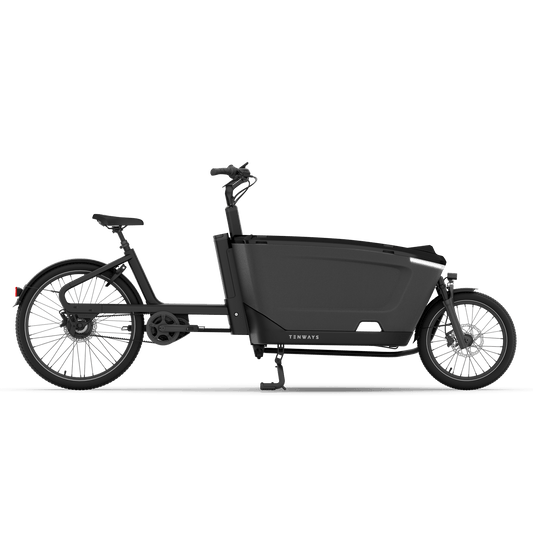
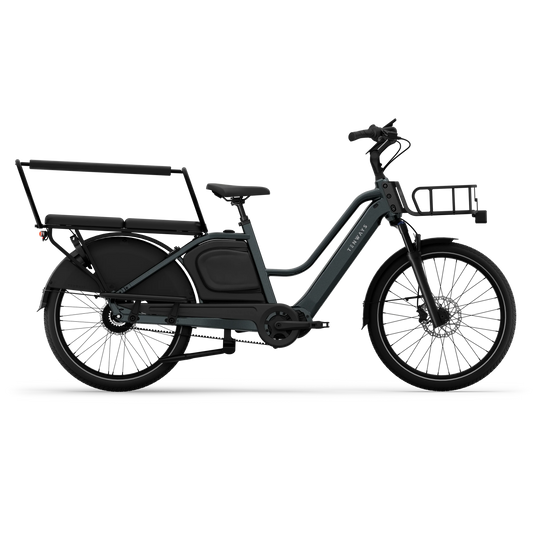
| Children or heavy luggage | Longtail or cargo e-bike | Designed for passengers and load capacity | Total weight and safety accessories |
| Small storage space or regular transport | Lightweight or compact e-bike | Lower weight and volume | Dimensions, lifting point, and battery |
| Mainly style and a low seating position | Fat bike, after a long test ride | Distinctive design and specific riding position | Legality, fit, and parts |
Which e-bike is an alternative to a fat bike?
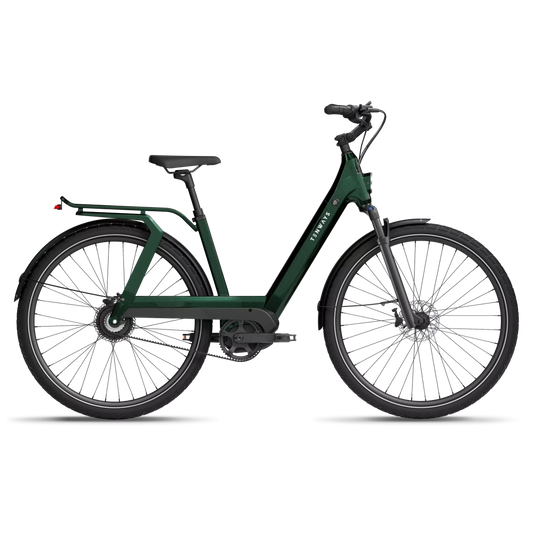
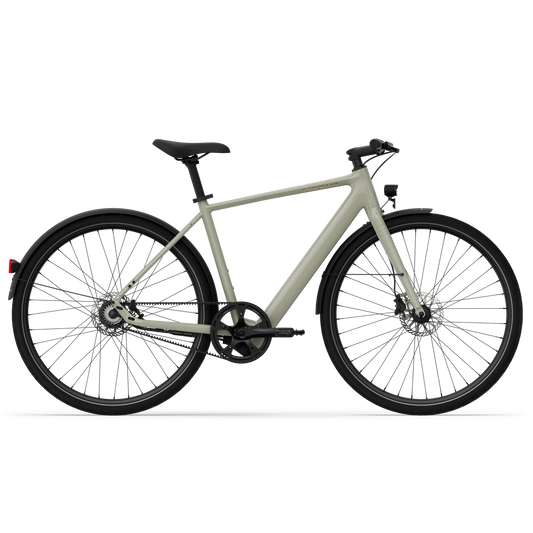
TENWAYS does not currently sell a fat bike in the Netherlands. For daily rides on paved roads or limited storage space, a lightweight electric bike is often more practical. For children or heavy luggage, a longtail ebike is a better fit, provided the total weight and safety accessories are suitable. Compare electric bikes for sale by route, fit, weight, and service. According to current product specifications, the CGO600 weighs 15 kg including the battery and excluding accessories. A bench seat does not automatically make a bike suitable for passengers; check the total weight, footrests, spoke guards, and handholds.

What should you check when choosing a fat bike or e-bike?
Use this short checklist before ordering:
• Legality: 250 W, pedal assistance, and cutoff at 25 km/h; walk assist up to 6 km/h.
• Fit: frame size, saddle adjustment, handlebar position, and maximum permitted weight.
• Safety: brake type, tires, lights, and stability during a test ride.
• Drive system: battery capacity in Wh, motor, sensor, and expected performance on your route.
• Practicality: net weight, accessories, storage space, and transport on a rack.
• After-sales support: warranty, workshop, parts, software, insurance, and theft protection.
Check the legal specifications
Ask the seller for the technical documentation and written confirmation that the assistance system meets the e-bike criteria. A CE mark or limited setting alone does not authorize the use of an unapproved motor vehicle as a bicycle. Take extra care with models that can easily continue assisting above the legal limit through a hidden menu, app, or loose cable.
Check the riding position, brakes, battery, and sensor type
Take a test ride that includes braking, cornering, setting off, and a section without assistance. Check that you can reach the ground safely without bending your knees too far while pedaling. Also ask how the battery is certified, where it can be charged safely, and how cold weather, weight, and assistance level affect range.
Check service, warranty, and parts availability
A useful warranty requires an accessible point of contact and a workable repair process. Ask who pays labor costs, which parts are in stock, and how long the motor, display, controller, and battery will remain available. Keep the purchase invoice, serial numbers, and technical documentation.
Frequently asked questions about fat bikes
Is a fat bike a bicycle?
Yes. The term fat bike primarily describes a bicycle with very wide tires. Under Dutch law, an electric fat bike remains a standard e-bike as long as its drive system meets the applicable e-bike criteria.
Is a fat bike always electric?
No. Fully mechanical fat bikes also exist. In everyday Dutch usage, the term usually refers to an electric model, but this is not a universal definition.
Up to what speed can a fat bike provide motor assistance?
A legal electric fat bike may provide motor assistance up to 25 km/h. Above that speed, you may continue to accelerate by pedaling, but the motor must not continue to assist.
Can a fat bike be carried on a bike rack?
Sometimes, but not on every rack. Check the weight per bike, total load capacity, wheel-tray width, wheelbase, and the car's permitted towball load. Do not place the bike on a rack if doing so exceeds the rack specifications.
Does TENWAYS sell fat bikes?
The current Dutch TENWAYS range does not include a fat bike. TENWAYS does offer city, hybrid, compact, and cargo e-bikes. The best alternative depends on terrain, distance, storage space, and transport needs.


