
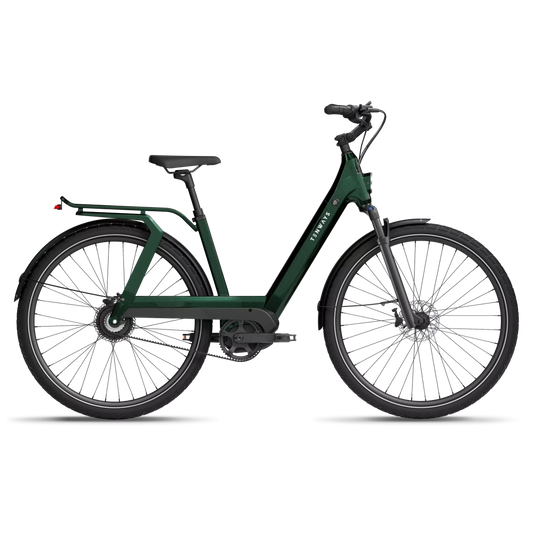
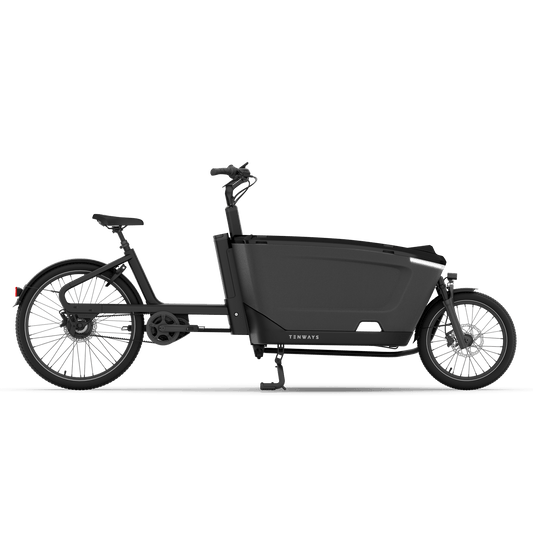


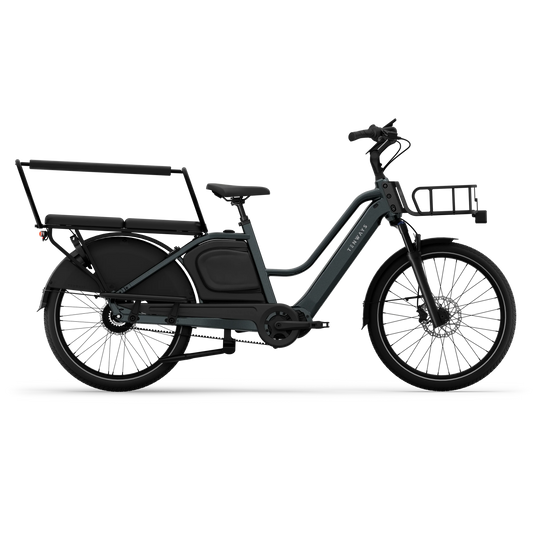
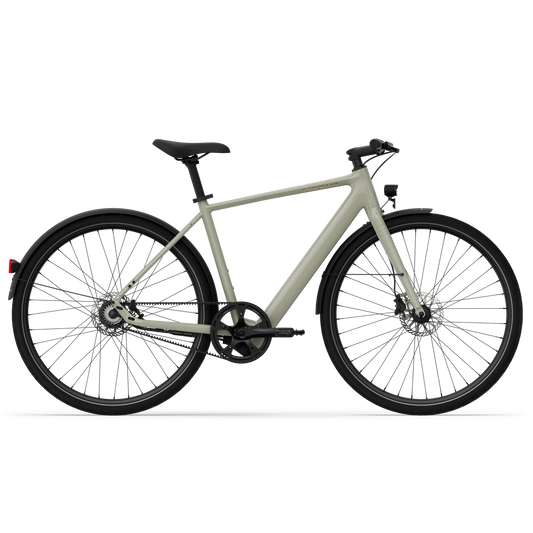


Front-hub, rear-hub and mid-drive motors place assistance and weight in different parts of an e-bike. The best choice follows the route: hills, load, gearing, low-speed control, service access and local rules matter more than the largest power or torque figure.
Front, Rear and Mid-Drive Motors Compared
Front-hub motor
A front-hub motor pulls from the front wheel while the rider powers the rear through the pedals. The system is mechanically separate from the bicycle’s gears and can be straightforward to package. On loose or wet surfaces, strong front assistance needs smooth control because the driven wheel carries less load than the rear.
Rear-hub motor
A rear-hub motor pushes from the back wheel, which often feels familiar and composed on urban roads. It does not send motor torque through the chain, belt or gears. Rear-wheel removal can require additional care because of the motor cable and axle hardware.
Mid-drive motor
A mid-drive sits around the crank area and applies assistance through the drivetrain. Its central position supports balanced weight distribution, and the motor can use the bike’s gears to stay in an efficient cadence on hills. The drivetrain also carries both rider and motor load, so correct shifting and maintenance matter.
Frame access is a separate decision. The complete guide to step-through electric bikes compares entry, fit and handling alongside motor choice.
Ride Feel and Control
The sensor and software shape the ride as much as motor position. A torque sensor measures pedal pressure and adjusts assistance in response, creating support that rises with the rider’s effort. A cadence sensor detects crank rotation and can feel more on-or-off, depending on its tuning.
Smooth starts are especially important on a step-through city bike used in traffic. Test the lowest assistance setting, restart on a slight incline and reduce pedal pressure while turning slowly. The bike should respond without a sudden surge or a long delay.

Control layout matters too. Assistance buttons should be reachable without moving the hand far from the grip, and the display should remain legible in bright or wet conditions.
Torque, Hills, Load and Energy Use
Torque, measured in newton metres, describes turning force. A higher figure can help with starts, gradients and heavier loads, but it does not predict the complete ride. Motor tuning, gearing, wheel size, total weight and traction all affect what reaches the road.
Mid-drive systems use the bicycle’s gears, so the rider can select a lower ratio before or during a climb. Hub motors drive the wheel directly and rely more on their own operating range. A well-tuned rear-hub system can be efficient on moderate urban slopes, while repeated steep climbs may favour a mid-drive with suitable gearing.
Do not test hill performance on an unloaded bike if the normal journey includes shopping or a child seat. Stay within the bike and carrier limits, and use the expected load during a dealer-approved test where possible.
Motor efficiency changes with speed and load. Repeated hard starts, steep gradients and riding in the highest assistance level consume more energy. Correct tyre pressure, a suitable gear and a steady cadence help the complete system work more efficiently.

Battery capacity is measured in watt-hours. It provides a useful basis for comparison, but advertised range remains conditional. Weather, elevation, assistance level, total load and stops can create large differences between riders.
A mid-drive is not automatically more efficient on every route, and a hub motor is not automatically better on flat roads. Compare complete bikes under similar conditions and use range claims as planning estimates.
Maintenance and Cost
Hub motors avoid sending motor torque through the bicycle drivetrain, which can reduce wear in that part of the system. Wheel service can be more specialised because the motor is built into the hub.
Mid-drives keep both wheels conventional, but the chain, belt, sprockets and gears handle motor assistance as well as rider input. Shifting under heavy load can accelerate wear. Use the correct gear before a climb and reduce pedal pressure briefly while changing ratio.

Before buying, check who can diagnose the motor, how replacement parts are supplied and whether the battery and controller can be serviced locally. A slightly higher purchase price can be worthwhile when the support route is clear.
Power Classes and Local Rules
Across the EU, standard pedal-assisted cycles are generally treated as bicycles when the auxiliary motor has a maximum continuous rated power of 250 W, assistance is reduced and cut off before 25 km/h, and the motor stops assisting when the rider stops pedalling. This is the EU’s standard pedelec definition, not a rule that applies unchanged to every powered cycle in every European country.
A 750 W label usually places the vehicle outside that standard EU pedelec exclusion. Type approval, registration, insurance, helmet rules and access to cycle infrastructure may then apply, depending on the vehicle and country. Peak output and continuous rated power are not the same figure, so read the technical documents rather than relying on advertising language.
The UK, Switzerland and individual European countries can use different categories or equipment rules. Check the current national transport authority before buying, modifying or importing a higher-powered model. Regulations and enforcement can change.

Which Motor Fits Which Rider?
Choose a front-hub system for simple, moderate assistance on suitable urban routes, provided the control feels predictable.
Choose a rear-hub system for smooth city riding and a drivetrain that remains mechanically separate from the motor.
Choose a mid-drive for regular hills, heavier loads or routes where using the gears effectively is valuable.
Prioritise a torque sensor when natural, proportional assistance is important.
Prioritise local service and compliant documentation over a larger headline power figure.
Motor choice becomes easier once the route is clear. Match the system to gradients, load and service access, then test how the assistance behaves at the slow speeds used for starting, turning and stopping.


