




Introduction
Rising global oil prices are pushing fuel costs up significantly, with the average price of Euro 95 petrol across all 27 EU member states reaching €1.965 per litre. The highest price increase is in Amsterdam, currently at €2.347 per litre.
In short, there's never been a more appropriate time to consider making a switch in your commute that could save you hundreds, if not thousands, by trading public transport or a car for an e-bike.
We've gathered all of the important data to give you the exact details on how much you can save switching to an e-bike for your commute.
Let's take a look!
E-bike vs. car costs
In April 2026, fuel prices in the EU are high due to market volatility, averaging €1.965p/litre. The highest increases have been in the Netherlands, as mentioned above, closely followed by Denmark (€2.246), Germany (€2.130), and Finland (€2.115). The lowest are Malta (€1.340) and Bulgaria (€1.394).
With this in mind, it's unsurprising that switching to an e-bike can be a far more economical choice — the lifetime cost of car ownership (50 years) in Germany, for example, ranges between €599,082 and €956,798, depending on the car model.
Taking into account petrol, parking, congestion, and purchase costs, it's unsurprising that costs rack up quickly for car owners commuting daily.
Ownership is an area where many people may be concerned about the cost of an e-bike, yet the upfront cost doesn't include the taxes, insurance, or higher maintenance costs of a car (and insurance on an e-bike is optional!).
|
Cost item |
EU evidence |
Comparative e-bike cost |
|
Fuel/energy |
€1.965p/litre in the EU for fuel, or as high as €2.347 per litre in cities like Amsterdam. |
Minimal charging costs, usually around 10p-22p per full charge. |
|
Parking |
Parking costs an average of €15-40 in the EU. Amsterdam averaged at €10.77 per hour, Oslo at €10.76, Paris at €9.82, and Stockholm at €8.91. |
Parking for e-bikes is generally free, unless you opt for longer-term storage or specialised locations. |
|
Congestion charges |
There are varying charges in EU cities for non-compliance with low emission zones (e.g., €180 in France for not displaying the ZFE sticker). |
Not applicable for e-bikes. |
|
Purchase price |
Cars have a higher upfront cost, with depreciation also acting as a hidden expense. The new purchase cost ranges from €25,450 to €46,979 in the EU, with the highest prices in Switzerland and Norway, and lower in Italy and Greece. |
Up to €3,500, with budget options from €500/€600. |
E-bike vs. public transport
For many people, public transport is a reasonable option to avoid the higher costs of cars. However, buses, trams, and trains can still be more expensive than an e-bike when factoring in all associated costs.
In EU cities such as Amsterdam, Copenhagen, and Paris, monthly public transport pass prices are €100, €100.37, and €90, respectively.
Outside of the financial costs, e-bikes also have an often overlooked benefit: not being beholden to frequently delayed timetables and packed streets. You can set off exactly when you mean to and take less-travelled routes to avoid the chaos.
|
Cost item |
Buses/trams/trains |
E-Bikes |
|
Typical trip costs per month |
Monthly passes in the EU reach up to €100 and can vary significantly depending on the operator and region. |
No pass necessary, and electricity use is very minimal, making each journey cost pennies rather than pounds. |
|
Energy use |
Public transport can be more energy-efficient than cars, but it still produces 97-79g of CO2 per passenger-kilometre for buses and 35g for trains. |
E-bikes are a low-energy alternative, meaning that they consume much less energy than public transport (e-bikes produce 13g of CO2 per kilometre). |
|
Maintenance |
Whilst public transport users don't pay for maintenance directly, ongoing fares and price increases are inevitable over long durations of use. |
Very low, with the bulk of maintenance costs being routine checks and service needs, alongside maintenance of electrical components. |
|
Flexibility |
Low, as you are tied to schedules, specific routes, and delays/cancellations outside of your control. |
High, as you dictate the route, pace, and parking. |
E-bike efficiency and total cost of ownership
If e-bikes replaced car journeys, they could cut car CO2 emissions by up to 50% and save about 0.7 tonnes of CO2 per person per year. Additionally, e-bikes also have an energy efficiency of 5.9 miles per kWh, translating into lower running costs over time compared to the multiple factors influencing car costs (fuel, tax, insurance, depreciation, and maintenance).
Accounting for the costs mentioned previously, an e-bike user could expect to pay between €1,025-€2,050 over 5 years in annual running costs, compared to €17,000+ for car running costs.
An e-bike can also pay for itself in the first 3-6 months of use due to the cutting of commuting costs alone, whether by car or public transport!
Beyond money: time, health, and convenience
Whilst the financial benefits are significant, an e-bike also saves you considerable time by providing a swifter commute, with the average downtown commuting speed in Paris, Rome, and Brussels being 13mph, 15 mph, and 12mph, respectively (when the average cyclist, not even e-cyclist, travels at 9.6mph).
Public-health guidance cites cycling as a way to reduce the risk of coronary heart disease, stroke, cancer, obesity, and type 2 diabetes, alongside the mental well-being benefits, which are also echoed in the EU Urban Mobility Framework.
Add in the lack of reliance on volatile fuel prices and strikes, and e-bikes are a flexible, healthy, and sustainable mode of transport that saves you time and money!

An e-bike is your practical, economical mobility solution
Oil prices are unlikely to drop soon, and as associated costs soar across the board for both cars and public transport, an e-bike is the perfect solution for savvy commuters.
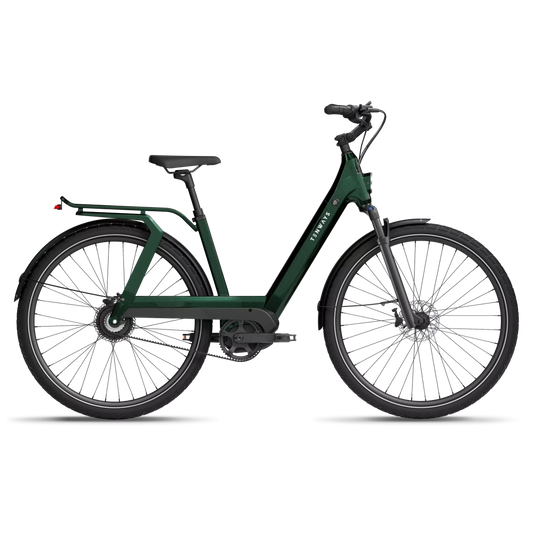
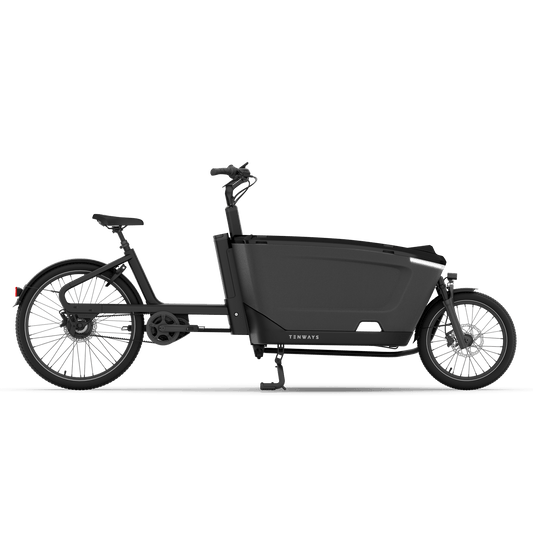
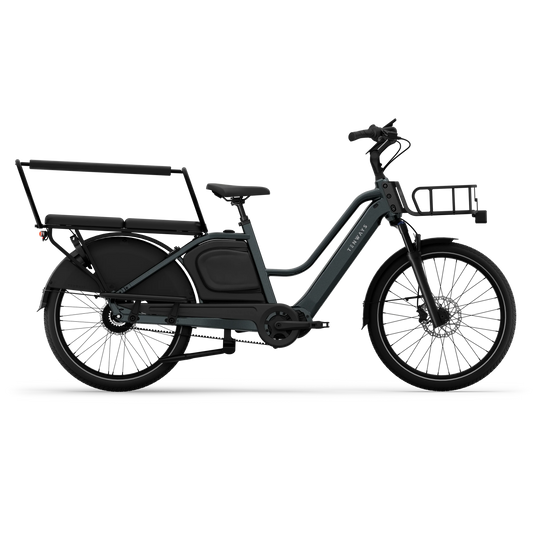
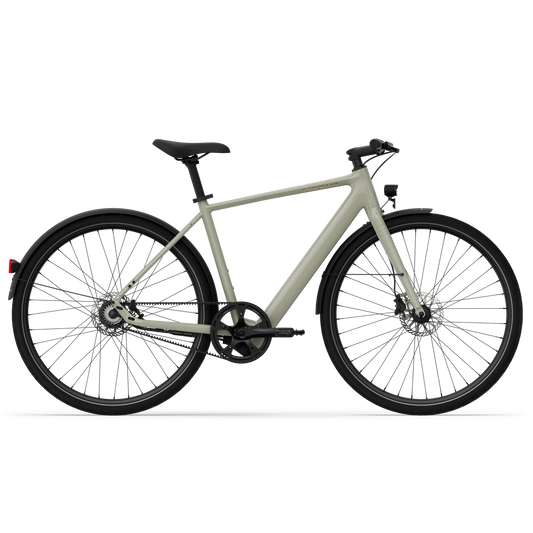
Our TENWAYS e-bikes are designed for efficiency, low maintenance, and everyday practicality, from the swift, featherlight CGO600 and refined, compact CGO600 Pro to the stylish and well-balanced CGO800S.
Why not find your energy-efficient ride by taking a browse through our full range of sleek e-bikes?


